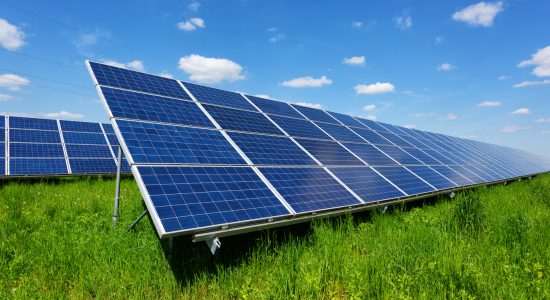
Now that spring is upon us, there is another type of garden to consider. Often referred to as “community solar gardens” or “community solar farms”, community solar projects are renewable energy plants whose electricity is shared by more than one household, and provide the opportunity for you to go green in the garden, even if your thumb is not.
How does a community solar garden work?
Community solar projects can be owned by the members of the community they serve, or by a third party, including the utility or a charitable non-profit organization, and allow participants to benefit from the solar farm without having to install solar panels on their home or property. Members share the electricity generated, at a cost which is typically less than the price they would pay their utility.
Can I purchase the electricity from the community solar garden without buying into the project?
Community solar project models vary according to the motives of the communities. The two most generalized avenues of participation are:
Ownership: Participants own a section of panels or shares which allows them to benefit from all power produced by their share.
Subscription: Participants can become subscribers and pay a potentially lower price for electricity generated from the solar farm without owning the panels.
What is not a community solar project?
Group Purchasing: Group purchasing offers the residents in a specific area the opportunity to purchase their own solar panels at a group or bulk rate through a solar installation company, which doesn’t result in a community project with shared benefits.
Green Tariffs: An agreement allowing the customers of a utility to purchase electricity sources from a renewable energy generation wind or solar plant, typically at a premium rate, and not providing the community with shared benefits.
Online Investment Platforms: Buying in on a new solar power system installation through an online investment platform where the power generated by the farm does not impact the participant’s electricity bill or include shared benefits for the community.
How can I find out more about community solar projects?
AEP Energy does not guarantee the accuracy, timeliness, suitability, completeness, freedom from error, or value of any information herein. The information presented is provided “as is”, “as available”, and for informational purposes only, speaks only to events or circumstances on or before the date it is presented, and should not be construed as advice, a recommendation, or a guarantee of future results. AEP Energy disclaims any and all liabilities and warranties related hereto, including any obligation to update or correct the information herein. Summaries and website links included herein (collectively, “Links”) are not under AEP Energy’s control and are provided for reference only and not for commercial purposes. AEP Energy does not endorse or approve of the Links or related information and does not provide any warranty of any kind or nature related thereto.
Daylight saving time ends every fall, and most of us gain an extra hour when we set our clocks back. While the time change may seem minor, it can influence daily routines and household energy use. As daylight hours get shorter and temperatures cool, lights are turned on earlier, heating systems begin running more often, …
Halloween is full of traditions, from carving pumpkins, decorating the house, handing out candy, and picking the perfect costume. But for many families, costumes and decorations can be among the season’s biggest expenses. Children quickly outgrow costumes, trends change from year to year, and seasonal decorations are often replaced before they’ve reached the end of …
Enter your zip code to see energy plans in your area
Already an AEP energy customer?Login to view account details or enroll at the same rate as new customers.
We found several utilities in your area! Please select yours below:
AEP Energy Reward Store is filled with a variety of energy-saving products for your home. It is a simple and convenient way for you to shop for items to make your home more energy efficient while saving you time and money.
Collect Reward Dollars each month ($3/electric, $3/natural gas) for simply being an AEP Energy Customer.
Shop AEP Energy Reward Store for energy-efficient products like smart thermostats, LED lighting, and more.
Redeem your accumulated Reward Dollars and enjoy smart solutions for your home.