Choose the Right Appliance for the Job: Microwave, Toaster Oven, or Air Fryer
ResidentialAug 19, 2026
When you’re trying to get dinner on the table, energy efficiency is probably the last thing on your mind. You’re more focused on what’s quick, convenient, and gets the job done. Fortunately, microwaves, toaster ovens, and air fryers all have their place in the kitchen, and each can help you save energy when used for the right task. Instead of asking which appliance is best overall, it may be more helpful to ask, “Which appliance is best for what I’m cooking?”
Let’s take a closer look at when each appliance shines and how choosing the right one can help you save time and make the most of the energy you’re using at home.
Reheating Leftovers? Reach for a Microwave
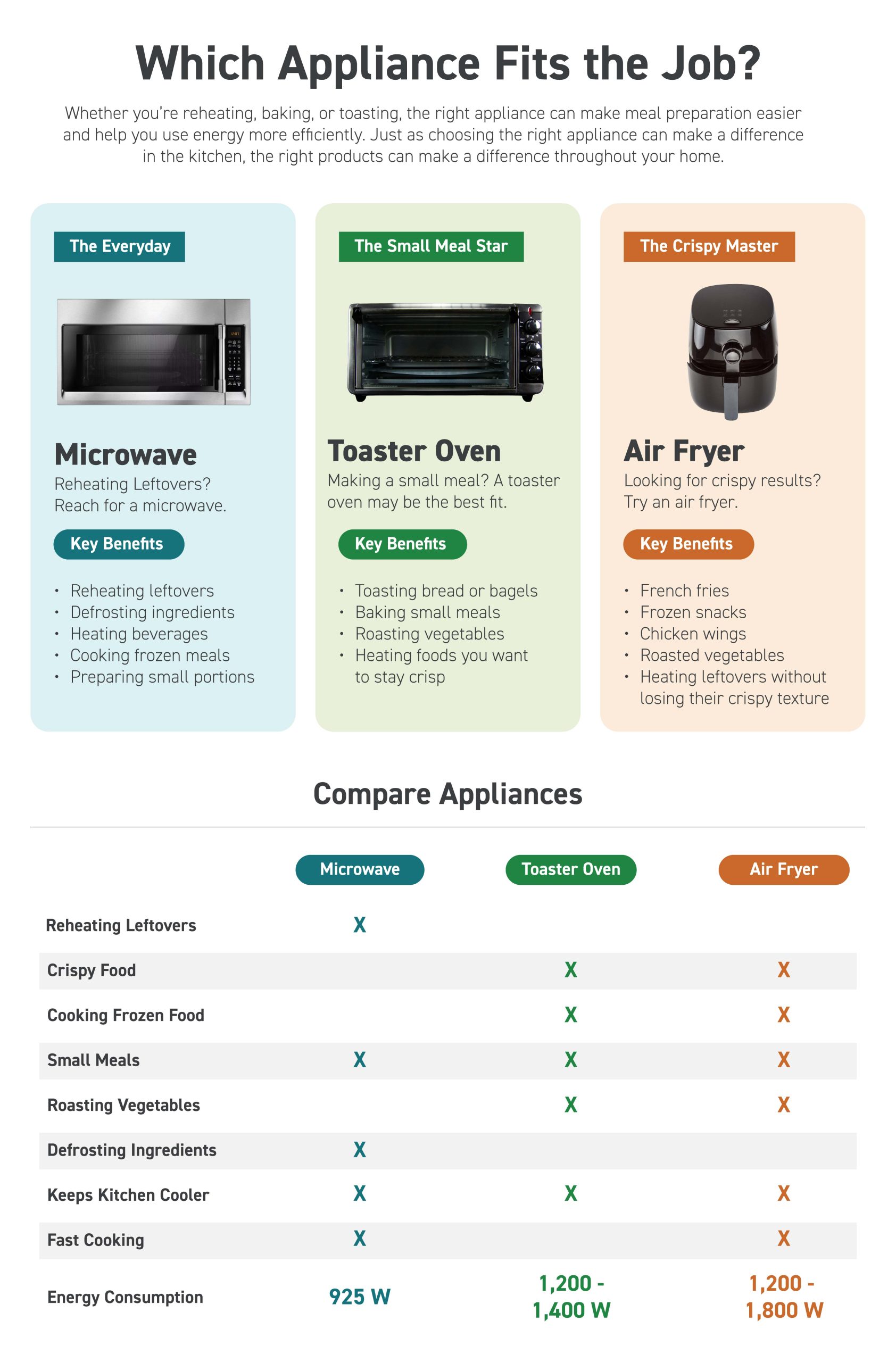
When it comes to reheating leftovers, microwaves are often the easiest and most energy-efficient choice. Unlike many other cooking appliances, microwaves heat food directly instead of first heating a cooking chamber or large volume of air. This allows food to warm up faster than it would in a conventional oven.
In fact, using a microwave instead of a conventional oven can use up to 80% less energy, depending on the type of food being prepared.
Microwaves are useful for everyday tasks such as:
Reheating leftovers
Defrosting ingredients
Heating beverages
Cooking frozen meals
Preparing small portions
Another benefit, especially during the summer months, is that a microwave generate less heat. If you’re looking to keep your kitchen more comfortable on a hot day, using a microwave for smaller meals can help reduce unnecessary heat from cooking.
Making a Small Meal? A Toaster Oven May Be the Best Fit
A toaster oven can toast, bake, broil, and roast on a smaller scale. Because it heats a smaller cooking space, it often uses less energy when preparing smaller meals.
A typical toaster oven uses about 1,200 to 1,400 watts of electricity, making it a practical choice when cooking for one or two people. While it may take longer than a microwave, it can provide the crispy, brown texture that many foods benefit from.
A toaster oven may be your best choice if you’re:
Toasting bread or bagels
Baking small meals
Roasting vegetables
Heating foods you want to stay crisp
Looking for Crispy Results? Try an Air Fryer
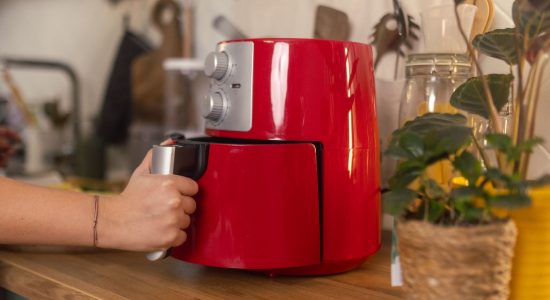
Air fryers have grown in popularity because they offer a quick and convenient way to cook foods with a crispy texture. They work by circulating hot air at a high speed, creating results similar to frying, but with little or no oil. Because air fryers cook in a compact space and often require less cooking time, they can be an energy-efficient option for many everyday meals.
Air fryers are useful for:
French fries
Frozen snacks
Chicken wings
Roasted vegetables
Leftovers you would like to reheat without losing their crispy texture
For smaller households, an air fryer can often deliver oven-like results without longer cooking times.
Trying to Keep the Kitchen Cool?
During the summer, the last thing you may want to do is heat your kitchen with a large appliance. While microwaves, toaster ovens, and air fryers can all reduce the need to use a conventional oven, microwaves are effective because they heat food directly, rather than heating the surrounding space.
Toaster ovens and air fryers also generate less heat than a traditional oven because their cooking chambers are much smaller. If staying comfortable is a priority, choosing a countertop appliance for smaller meals can help reduce excess heat in the kitchen.
So, Which Appliance Uses the Least Energy?
If you’re looking strictly at energy use, the microwave comes out ahead for reheating leftovers and preparing smaller portions. The average microwave uses about 925 watts, compared to roughly 1,225 watts for a toaster oven.
However, energy efficiency isn’t always about choosing the appliance with the lowest wattage. It’s also important to consider which appliance is best suited for the meal you’re preparing.
For example:
Reheating leftovers? Choose a microwave.
Baking a small meal? Use a toaster oven.
Craving something crispy? An air fryer may be the better option.
By matching the appliance to the task, you can avoid using full-size appliances when they aren’t necessary.
Choosing the Right Appliance Can Make a Difference
When it comes to energy efficiency, there isn’t a clear-cut winner. Each appliance serves a different purpose and can help you use energy more efficiently when it’s used for the right task.
The next time you’re preparing a meal, think about what you’re cooking and how much you’re making. An easy switch to a countertop appliance may help save energy while making meal preparation easier.
Whether you’re reheating leftovers, making a quick meal, or looking for ways to keep your kitchen cooler, small choices can make a difference. If you’re looking for more ways to reduce energy use at home*, explore Reward Store for products designed to improve comfort and efficiency throughout your home.
*Please note, not all AEP Energy customers or price plans are eligible to earn Reward Dollars. Some exclusions apply.
AEP Energy does not guarantee the accuracy, timeliness, suitability, completeness, freedom from error, or value of any information herein. The information presented is provided “as is”, “as available”, and for informational purposes only, speaks only to events or circumstances on or before the date it is presented, and should not be construed as advice, a recommendation, or a guarantee of future results. AEP Energy disclaims any and all liabilities and warranties related hereto, including any obligation to update or correct the information herein. Summaries and website links included herein (collectively, “Links”) are not under AEP Energy’s control and are provided for reference only and not for commercial purposes. AEP Energy does not endorse or approve of the Links or related information and does not provide any warranty of any kind or nature related thereto.
As fall approaches, many homeowners begin preparing their homes for the months ahead. Whether you’re organizing seasonal decorations or tackling overdue cleaning projects, it’s a great time to take a look at the items around your home. A good place to start is by decluttering. Taking inventory of the items around your home can help …
As summer gives way to fall, many homeowners begin preparing for seasonal changes around the house. From swapping out summer wardrobes to tackling fall home maintenance projects, this time of year is about preparing for what’s ahead. It is also a good time to think about your home’s energy use. While fall is often one …
Enter your zip code to see energy plans in your area
Already an AEP energy customer?Login to view account details or enroll at the same rate as new customers.
We found several utilities in your area! Please select yours below:
AEP Energy Reward Store is filled with a variety of energy-saving products for your home. It is a simple and convenient way for you to shop for items to make your home more energy efficient while saving you time and money.
Collect Reward Dollars each month ($5/electric, $3/natural gas) for simply being an AEP Energy Customer.
Shop AEP Energy Reward Store for energy-efficient products like smart thermostats, LED lighting, and more.
Redeem your accumulated Reward Dollars and enjoy smart solutions for your home.