How to Understand Your Electricity Bill.

We know your energy bill contains a lot of information. We want to help you understand the key terms and the charges reflected in your monthly bill. Understanding its components can help you identify areas where you might save money and manage your energy consumption more effectively. Flip through the overview or watch our video to learn more. ⬇️ 

at-a-glance

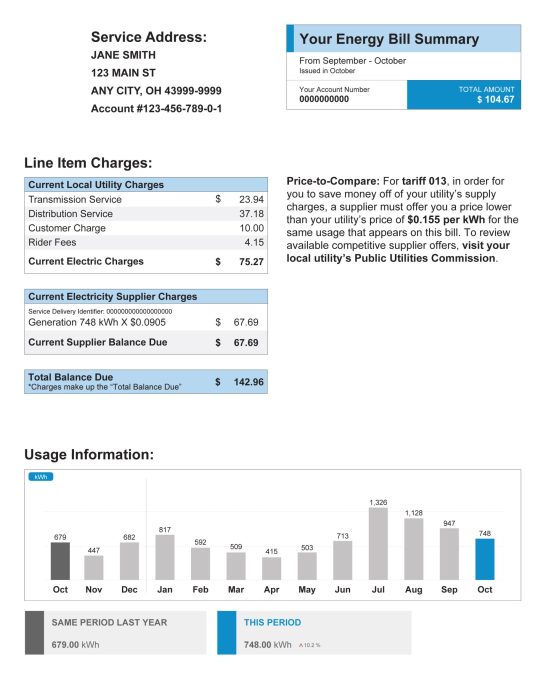
Key Components & Charges

Generation (supply)

The cost to produce the electricity you consume.

Transmission

The cost to move electricity from power plants to the local grid.

Distribution (delivery)

The cost to maintain poles, wires, meters, and local service.

Customer Charge

A fixed monthly fee for meter and account maintenance.

Taxes & Regulatory Fees

Local, state or federal charges and utility-specific surcharges.

Adjustments or Credits

Billing corrections, renewable energy credits or time-of-use credits.

know what the numbers mean

Understand Your Usage

Understanding your usage starts with the basics – electricity is measured and billed in kilowatt-hours (kWh). Whether it’s normal usage or high energy culprits like HVAC, water heating, EV charging, or added appliances, tracking your usage over time helps reveal what’s truly driving your costs.

  • A kilowatt-hour is the unit used to measure how much electricity is used. One kWh = 1,000-watt appliance running for one hour or a 100-watt bulb on for 10 hours = 1 kWh.

  • Compare kWh across billing periods (monthly) or look at daily averages to spot trends and anomalies:


  • Multiply the kWh used by your per-kWh rate:


    Example: Cost = 900 kWh x $0.12/kWh = $108

  • Lower thermostat setpoints, shift high‑use tasks to off‑peak, swap to LEDs, reduce water‑heater temperature, and unplug or schedule big appliances. For bigger savings, consider insulation, HVAC maintenance, or ENERGY STAR appliances.

From the blog

Helpful insights for energy cost savings

Read practical tips, step‑by‑step guides, and quick tools to understand your bill, reduce consumption, and lower your costs.

How to Understand Your Electricity Bill

Small Business

3 min read Have you ever wondered what goes into your business’s electricity costs? Understanding what goes into your energy bill can help you make smarter decisions and better manage your energy expenses. Let’s take a closer look at the main parts of electricity pricing and how they affect your bottom line. Energy Supply: This …


Understanding Energy Costs and Choosing the Right Plan

Residential

Energy prices are a significant concern for many households and businesses today. With various factors influencing these costs, it’s essential to understand what drives them, why they might be higher than usual, and how to manage them through different energy plans. This guide provides a comprehensive overview of the elements impacting your energy costs and …

Bundling Up: How Small Businesses Can Save on Energy Costs

Small Business

Let’s talk about something that’s on the minds of many small business owners: energy costs. With the price of everything from raw materials to labor on the rise, finding ways to cut costs and stabilize your budget is more important than ever. One strategy that’s gaining traction is bundling natural gas and electricity through a …

Six Simple Upgrades for a More Energy-Efficient Home

Residential

With spring upon us, it’s a great time to start making changes that will improve your home’s comfort while lowering your energy spend. Improving your home’s energy efficiency doesn’t have to involve major renovations; here are six simple ways: Upgrade your Home’s Insulation Proper insulation in your home helps to maintain a consistent temperature by …